Table of Contents
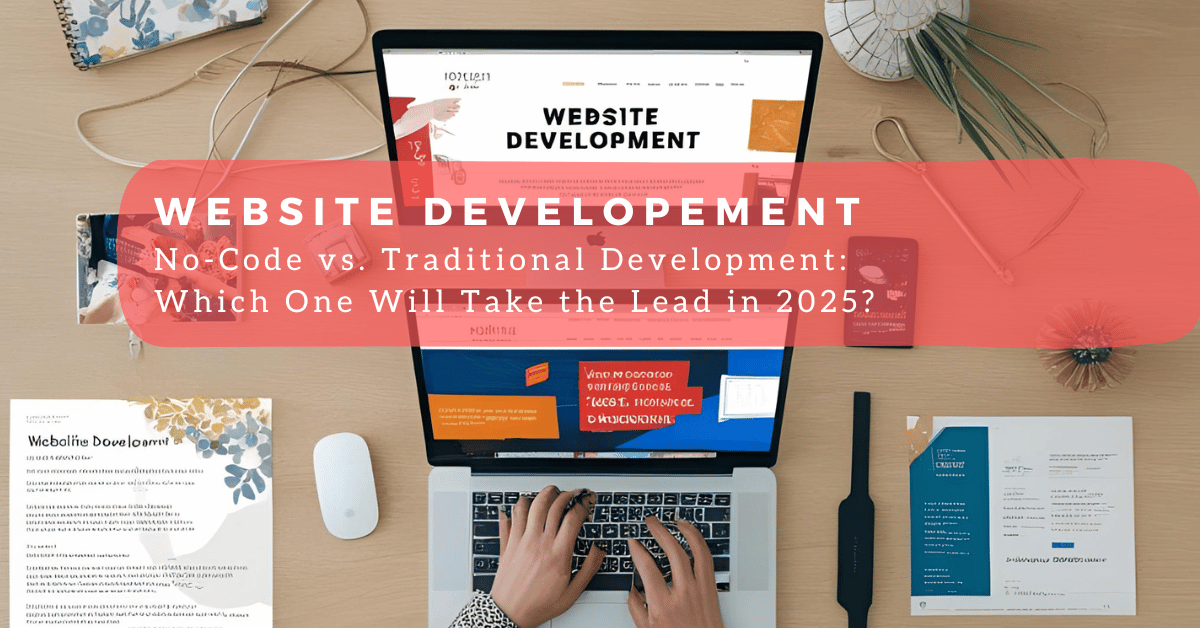
The world of web development is changing fast. What once required months of coding by skilled developers can now be built in days—sometimes even hours—thanks to no-code platforms. The numbers don’t lie: Gartner predicts that by 2025, around 70% of new applications will be built using no-code or low-code tools.
That raises a big question: Will traditional development become a thing of the past, or will it still hold its ground? Let’s break it down.

🚀 The Current Landscape of Web Development
Traditionally, building a website or app meant starting from scratch—writing code line by line, testing, debugging, deploying. It’s a slow but powerful process, offering complete control and customization.
But not everyone has months to spare. Businesses now need fast, flexible, and cost-effective solutions. That’s where no-code development shines. With drag-and-drop interfaces and pre-built components, no-code tools let anyone—yes, even non-tech folks—build functional apps with little to no coding.
🧠 Why Traditional Development Still Matters
Even in 2025, traditional development is alive and well—especially for complex projects where custom features, performance, and tight security are non-negotiable.
When you’re building intricate systems or apps with advanced backend logic, traditional coding gives you full control over the architecture, security layers, and scalability. However, it demands a team of skilled developers, longer timelines, and bigger budgets.

🧩 The Rise (and Rise) of No-Code Platforms
No-code platforms have exploded in popularity—and for good reason. They empower teams to launch web apps in a fraction of the time it would take with traditional methods.
- Development time cut by up to 90%
- Cost savings of up to 70%
- Non-developers building 80% of new apps by 2024
Platforms like Webflow are a game-changer, allowing users to design professional-grade websites without writing a single line of code. Many companies now even partner with Webflow enterprise agencies to scale these no-code builds to enterprise-level quality.
🛠️ How No-Code Works
Visual Interfaces – No-code is all about visual development. Instead of typing code, users drag, drop, and connect components to bring their ideas to life. It simplifies everything—from UI design to database management.
Pre-Built Templates – Templates make no-code even faster. These blueprints give you a solid starting point, which you can tweak as needed. There’s no need to reinvent the wheel.
Seamless Integration – Modern no-code tools come with built-in support for APIs, databases, and third-party services. You can plug in AI features, connect to CRMs, or automate workflows—all without writing custom backend code.
⏱️ Speed vs. Cost: Which Wins?
Let’s talk the real-world timelines and budgets.
| Factor | Traditional Development | No-Code Development |
|---|---|---|
| Timeline | 2–8 months (often longer) | 1–3 weeks (even days) |
| Cost | $300k/month+ in large projects | $20k–$50k per application |
| Team | Full dev team required | Small, agile team or solo |
| Maintenance | Ongoing manual work | Mostly Automated |
Traditional dev gives you flexibility and custom logic but at a high cost and longer timeline. No-code, on the other hand, is fast, accessible, and budget-friendly—great for startups or MVPs.
💡 Real-World Use Cases
✅ E-Commerce
No-code platforms let businesses launch online stores with features like product listings, order processing, and inventory tracking—all without coding. Perfect for entrepreneurs and small businesses.
✅ Business Landing Pages
Need a sleek landing page for your next campaign? No-code makes it easy to build, test, and optimize pages without dev help—marketers love it.
✅ Web Applications
From internal dashboards to employee onboarding portals, businesses use no-code to build powerful tools tailored to their needs. Tools like Zapier make it easy to connect different systems seamlessly.
🔮 What’s Next: Trends to Watch in 2025
🤖 AI Integration
AI is becoming a big part of no-code platforms. It can suggest workflows, automate testing, and even enhance UX through personalized features. Tools like Microsoft Power Apps’ AI Builder are already showing what’s possible.
📱 Cross-Platform Development
Build once, launch everywhere. Frameworks like Flutter and Kotlin Multiplatform let developers create apps that run across web, mobile, and desktop from a single codebase—speeding up development while keeping native performance.
🆚 So, Which One Wins?
There’s no one-size-fits-all answer. If your project demands complex backend logic, custom features, and strict security—traditional development is still your best bet.
But if you’re looking for speed, cost-effectiveness, and ease of use—especially for MVPs, internal tools, or marketing pages—no-code is the clear winner.
In 2025 and beyond, expect to see more hybrid teams where developers and non-developers collaborate. No-code isn’t replacing traditional coding—it’s complementing it, unlocking new ways to build faster and smarter.
If you’re interested to know more about Search Engine Optimization (SEO), check out the latest articles SEO Report Powerful Tips to Boost Your Website’s Search Ranking in 2025SEO Checklist in Malaysia 2024 — packed with insights to help you stay ahead of the competition.